DELTIN JAQK CASINO GOA

Deltin JAQK anchored in Goa's serene Mandovi river is one of the foremost casinos in Goa. With over 350 gaming positions, upbeat entertainment & a multi-cuisine restaurant, an Aqua Bar, this offshore casino promises to give you an unforgettable experience.
LUXURY GAMING

40,000sq.ft of luxury gaming on three levels with 850 gaming positions. | Live entertainment including floorshows, bands, Stand-up-comedy and much more. | All the Games people play – Poker, Roulette, Indian Flush, Baccarat, Blackjack, Pontoon, Casino Wars, Sic Bo, Money Wheel, etc. |World cuisine buffets and A-la-carte menus. The finest Single Malts, Wines & Live cooking stations. | The Grand Exclusive Whiskys lounge with its bar entertainment. | Above all L – 4: Gaming by Invitation.

CASINO CARNIVAL GOA

Casino Carnival Goa is a premium entertainment casino in Goa, anchored in the Mandovi River overlooking the charming city of Panjim. We offer High Quality Entertainment and Live Gaming experience in Goa comparable with the best practices of international casinos.
Spanning across 4 elegant decks, Casino Carnival Goa offers you a wide range of activities to choose from, for all ages. Our dedicated Entertainment Deck aboard the best casino ship in Goa, brings to you scintillating performances from some of Goa's coveted artists as well as exclusive international artists performances. Our Casino deck offers all the popular International games and Indian favorites, as well as the latest slot machines in India. Our dedicated Kids Zone offers many games and toys for our little citizens to enjoy themselves and rest, whilst being looked after by our specially trained nannies. The fourth deck on Boa Sorte, our Casino vessel is open to the sky and the lights of Panjim city and is available


LUXURY GAMING

40,000sq.ft of luxury gaming on three levels with 850 gaming positions. | Live entertainment including floorshows, bands, Stand-up-comedy and much more. | All the Games people play – Poker, Roulette, Indian Flush, Baccarat, Blackjack, Pontoon, Casino Wars, Sic Bo, Money Wheel, etc. |World cuisine buffets and A-la-carte menus. The finest Single Malts, Wines & Live cooking stations. The Grand Exclusive Whiskys lounge with its bar entertainment. | Above all L – 4: Gaming by Invitation.


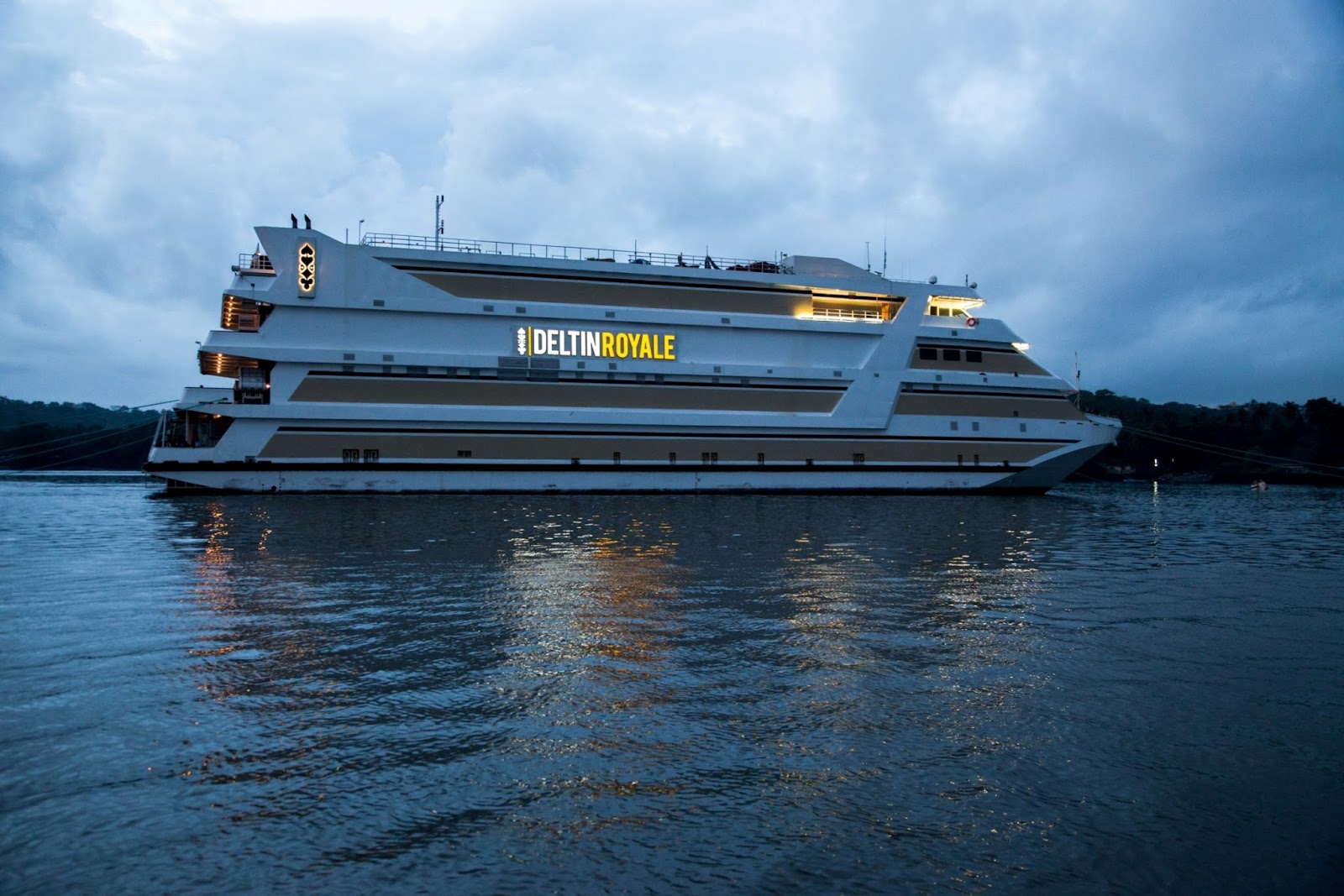
DELTIN ROYALE CASINO GOA

Deltin Royale offers you plenty of action at the gaming tables to get your heart racing. A multitude of games, plush lounges and wonderful cocktails create just the right place for your next big win.

LUXURY GAMING

40,000sq.ft of luxury gaming on three levels with 850 gaming positions. | Live entertainment including floorshows, bands, Stand-up-comedy and much more. | All the Games people play – Poker, Roulette, Indian Flush, Baccarat, Blackjack, Pontoon, Casino Wars, Sic Bo, Money Wheel, etc. |World cuisine buffets and A-la-carte menus. The finest Single Malts, Wines & Live cooking stations. | The Grand Exclusive Whiskys lounge with its bar entertainment. | Above all L – 4: Gaming by Invitation.

TEXAS HOLD'EM POKER

The game begins with each player being dealt two cards, face down. The dealer then places five community cards - the flop (a series of three cards), and the turn and river (two additional single cards). Players can check, bet or fold after each deal.

AMERICAN ROULETTE

The dealer begins the game by spinning the ball. Those playing must correctly guess the segment that the ball will end up in. Players can place their bets till the ball slows down and the dealer announces 'no more bets'. The number and the colour of the slot the ball falls in is the winning number and winning colour.

INDIAN FLUSH (TEEN PATTI)

Indian Flush or Teen Patti begins with the players placing a minimum stake in the pot. Every player is dealt three cards, after which they bet on who has the best three card hand. The game ends when all except one player have folded, or all except two players have folded and one of them pays for a show.

BACCARAT

The aim of Baccarat is to bet that either the banker's side or the player's side will achieve a 'point total' of his or her hand closest to 9. A bet is placed either on the section marked 'player', 'banker' or 'tie'. The hand that contains the higher 'point total' is the winner.


BLACKJACK

In Blackjack, players must aim to have cards that total 21, or as close to 21 as possible without going over. The players place their bets and receive two cards. To win, players must get a card total higher than the dealer's hand without going over 21. The dealer can lose to some players but still beat other players in the same round.

SLOT MACHINES

The easiest of all casino games, those wanting to play the Slots simply need to spin the reels and cross their fingers. Hitting the jackpot or a landing on a winning combination depends purely on luck. Players can choose between three Slot Machine types - the multiplier, the buy-a-pay and the progressive.

3-CARD DRAW POKER

The American version of 'Brag', this game begins with the dealer giving each player, including him or herself, 3 cards dealt face down. Players can choose to fold or bet after seeing their cards. Those who fold, forfeit their ante wager. Those who raise must make an additional play bet. The player with the higher hand wins.

5-CARD POKER

Five-Card Draw Poker is played with a 52-card deck. The players place an ante bet with the option of playing for a jackpot bonus. Each player receives five cards face down. The dealer gets 5 cards, with 1 card facing up. Players can fold or raise after seeing their hand. Whoever has the higher hand wins.

MINI FLUSH

The Indian version of 3-Card Poker, the aim of this game is to beat the dealer's hand. The dealer gives the player and him or herself 3 cards each, dealt face down. Players can choose to examine their cards, after which they either fight against the dealer's card or forfeit. The hand that is higher than the dealer's hand Similar to War, this game is played by flipping cards. The game begins with the players placing their bets. The dealer then turns over two cards, one for each player and one for him or herself. If a player's card is higher than the dealer's, the player wins. If the two cards tie, the player can surrender or go to war.


CASINO WAR

Similar to War, this game is played by flipping cards. The game begins with the players placing their bets. The dealer then turns over two cards, one for each player and one for him or herself. If a player's card is higher than the dealer's, the player wins. If the two cards tie, the player can surrender or go to war.

PONTOON

Known as Treasury 21 in Australia, Pontoon is a simple arithmetic game played on a Blackjack table. The aim of the game is for the punter to receive cards totaling more in face value than the banker's, but not exceeding 21, to avoid going 'bust' and losing.

MONEY WHEEL


The Big Six Wheel or the Big Six is played by spinning a large vertical wheel that is divided into a number of equal segments separated by spokes or pins. Each segment has a number. The game begins when the dealer spins the wheel. The winning segment is indicated by the pointer on the wheel.




CASINO PRIDE GOA

The Pride Group Started with Hotel Neo Maajestic in 2007 and has gradually built its strong family of four casinos and two Five Star hotels


1. -River Mandovi, Captain Of Ports Jetty, Panaji, Goa.
2. -Hotel Neo Majestic, Near Azad Bhavan, Porovorim Village, Bardez, Goa
3. -Hotel La Calypso, Saunta Vaddo,Calangute-Baga Road, Goa.
4. -Bogmallo Beach Resort,Bogmallo, Goa.
5. - Near Azad Bhavan, Porovorim Village, Bardez, Goa
6. - 7/129 B, Saunto Vaddo, Calangute-Baga RoadBardez, Goa.


COLVA BEACH GOA

Colvá is a coastal village in Salcete, south Goa, on the west coast of India. Colvá beach stretches for around 2.4 kilometres (1.5 mi), part of a beach consisting of about 25 kilometres (16 mi) of powder white sand, lined along its shore by coconut palms and extending from Bogmalo in the north to Cabo de Rama in the south.
Colvá is a famous tourist destination, visited for its beaches, budget hotels, guest houses, beach shacks, food stalls, restaurants, pubs and bars. The beaches are constantly monitored by lifeguards, and the swimming areas are flagged for warnings.
The village had significant importance to Portugal and was the retreat for Goa's high society, who would come to Colvá for their "Mundanca" or change of air. Today the Portuguese area is dotted with houses or villas, including many ruins. On weekends, huge crowds of tourists, visitors from around the world as well as local Indians, enjoy the sunset and various activities. 
The beach is particularly busy in October, when hordes of religious pilgrims come and visit Colvá Church, called Igreja de Nossa Senhora das Merces, that was founded in 1630 by the Roiz family and rebuilt in the eighteenth century on the village square.

DATTA TEMPLE GOA

Shri Datta Mandir at Sanquelim is well known all over Goa for the miraculous cure for mental troubles which the deity, the Hindu Trinity of Brahma, Vishnu and Maheshwar, is said of offer.

The temple is situated 37 kms at Dattawadi, Sanquelim, and 40 kms. from Margao.

The century old temple of trimurthy (Hindu) has a back drop of a beautiful hillock covered with dense groves of areca palms.

The most important festival celebrated here, which is attended by devotees from all over Goa, is Datta Jayanti which falls in the month of December. The deity is believed to have cured many people of unsound mind. The entire interior consist of white marble.

Shri Dutta Mandir is a century old popular Hindu shrine in Goa. It is situated at 37 kms at Dattawadi, Sanquelim, and 40 kms. from Margao. This temple is dedicated to the Hindu Trimurthy that is the combined form of Brahma, Vishnu and Mahesh.


BRAHMA TEMPLE GOA

The Brahma temple is situated at a village called Brahma-Carambolim to distinguish it from CarambolimVillage near Old Goa, the original home of the deity. Brahma-Carambolim is located 7 km from Valpoi town in Sattari Taluka. The stone sculpture of Brahma here is truly magnificent.

Carved out of a single black basalt stone, it is one of the finest specimen of Kadamba art and is an ancient image still in worship. The sculpture has a beard on the central face.

In his four hands he carries a ladle in his upper right hand, the book of Vedas in his upper left hand, Kamandalu in his lower left hand and chanting beads in his lower right hand which is in Varamudra posture.

Here again Brahma is a migrant deity, originally from the village with the same name – Carambolim that is located right next to Old Goa. The image was hurriedly carried away by its devotees. But where as most of the Gods saved in this way were installed nearby, just across the border,

CABO DE RAMA FORT GOA

Portuguese claimed the Cabo de Rama Fort after defeating the Raja (King) of Soonda and renovated it subsequently. In the past, the fort has switched hands between Hindu, Muslim monarchs and the Portuguese and witnessed many battles in history.

The present rickety structure with turrets and rusty cannons is a leftover of the Portuguese. The Portuguese equipped it with 21 guns and military barracks, as well as commandant quarters and a chapel. It was abandoned when the Portuguese left this place.

 Later, this fort housed a government prison till 1955 and was abandoned again. Today, this fort is in ruins, but is a popular tourist attraction of Goa.

Inside the Cabo de Rama Fort, there is the church of Santo Antonio which is in excellent condition and is still used by devotees.

The white church and the black fort provide a photographic picture of stark contrast. People come here to pray and just enjoy the mystical atmosphere of the fort. Cliffs drop steeply to the sea provide a panoramic outlook of the surrounding areas, at the western side of the fortress.

CHAPORA FORT GOA

Chapora Fort, located in Bardez, Goa, rises high above the Chapora River. Before the Portuguese arrived in Goa in 1510, this location was the site of another fort. The fort changed hand several times after Portuguese acquired Bardez. Trying to end the Portuguese rule in Goa, Prince Akbar joined his father’s enemies, the Marathas in 1683 and made this place his base camp.
It became the northern outpost of the Old Conquests. After the Portuguese recovered from an encounter with the Marathas, they strengthened their northern defences and provided shelter to the people there.

The present fort was built in 1717, replacing the older fortifications. Across the Chapora river, the Hindu ruler of Pernem, the Maharaja of Sawantwadi who was an old enemy of the Portuguese held the fort for two years after it fell to the Marathas in 1739 in its first test. When Goa's border moved northwards with the acquisition of Pernem as part of the New Conquests, the fort lost its military significance towards the end of the century. It is a pleasant place to wander that offers fantastic views north across the Chapora river to Pernem, south over Vagator and also far out to the Arabian Sea in the West.

FORT AGUADA GOA

The fort was constructed in 1613 to guard against the Dutch and the Marathas. It was a reference point for the vessels coming from Europe at that time. This old Portuguese fort stands on the beach south of Candolim, at the shore of the Mandovi River. It was initially tasked with defense of shipping and the nearby Bardez sub district.

A freshwater spring within the fort provided water supply to the ships that used to stop by. This is how the fort got its name: Aguada, meaning Water. Crews of passing ships would often visit to replenish their fresh water stores. On the fort stands a four-storey Portuguese lighthouse, erected in 1864 and the oldest of its kind in Asia.


LAMGAU CAVES GOA

Caves in Goa is unique attractions. Lamgau Caves is one of them and visited by the tourist in Goa.The Goa caves are very interesting and people come from around the globe to experience them.

Location : Lamgau Caves is located at Bicholim, which is 35 Kms from north-east of Panaji, Goa.

About Lamgau Caves
Lamgau Caves is a man made caves. To reach the Lamgau Caves  there are 3 way. One way is through Lamgau village itself after you reach there by trek along the base of the hill. Second way is the drive through Bicholim on the road towards Mapusa and then Panaji. Third way to reach the caves is through river.

Lamgau Caves are a pair of caves and these are carved out of decomposed laterite, which is quite delicate. The second Lamgau Cave is much larger than the first one. A stone linga installed in this cave. With this stone linga you also see the tulsi vrindavan and a small nandi Bull.  The opposite cave is way a lot of larger and used largely as a hideaway against monsoon and is sort of deep with a labyrinthine passage. Right over the Lamagau Caves are large open cast iron ore mines. These caves shows a slow transition from early Buddhism to Hindu religion.


FORT TIRACOL GOA

Fort Tiracol, sometimes known as Terekhol Fort, is a fort in Goa, India. Located on the northern tip of Goa at the mouth of the Tiracol River, Fort Tiracol is reached by a ferry from Querim, 42 km North of Panaji. The name probably originated from the Marathi tir-khol meaning "steep river-bank".

The fort was originally built by Maharaja Khem Sawant Bhonsle, the Raja of Sawantwadi, in the 17th century. The site chosen was a hillock on the Northern (right) bank of the river, which gave a commanding view of the Arabian sea. The Bhonsles of Sawantwadi kept a sizeable fleet of native vessels which sheltered in the Tiracol River. The fort initially consisted of 12 guns, a barrack and a chapel.


DIVAR ISLAND GOA

The island of Divar  (derived from the word Dipavati or 'small Island' in Konkani) lies in the Mandovi river in the Indian state of Goa.

It is located approximately upriver 10 km (6 mi) from Panjim. The Island is connected to Old Goa on the south-east side, Ribandar, on the south-west side and Narve on the north side, all by ferry. A launch also connects Divar to the city of Panjim from further north-west, in the island-village of Vanxim. The Konkan Railway passes through the village and the nearest stop to the village is the train station at Carambolim.
The drive to the village is scenic, with paddy fields and wooded hills lacing the roadway, very typical of the Goan countryside.
nitially, there were three Communidades in Divar : Piedade, São Matias (now Malar), Goathias. The Piedade Communidade was later sub-divided into two, Goltim and Navelim. According to legend, the original inhabitants of this island were people who once lived in Old Goa but had to desert during a disastrous pestilence that heavily decimated the population of Old Goa.

PEQUENO (OR) BAT ISLAND GOA

The Pequeno Island in Goa also known as the Bat Island is located just a kilometer away from Baina beach of Vasco-da-Gama. The island forms a great surprise for those seeking adventures and comprises of a small rocky beach and a small stretch of green.

The Pequeno Island is famous for snorkeling and is considered a perfect destination for the snorkelers. For snorkeling, the training and equipments are provided by the tour organizers and operators. The island provides a very interesting stopover along the Goan coast and can be reached by a 30 minute ride into the sea.

At the Pequeno Island one can also enjoy a day off as there are numerous boatmen who moor themselves off Vasco. A vessel can be hired from them or they can be asked to reach one off at the island. The boatman can then be asked to come and pick one up the next day. Thus one can enjoy a whole day off at a private little beach of their own.


KUSKEM WATERFALL GOA

The Kuskem waterfall is located in the Canacona taluka in South Goa. It is situated in idyllic Kuskem village at about 20 km from the Cotigao wildlife sanctuary off NH 17.

The waterfall at Kuskem is not very well known like the other waterfalls in Goa such as the Dudhsagar and Harvalem waterfalls. It is best visited only during the rainy season as it dries out during the summers. The water falls from a lofty source leaving a clear leap of milky water. 

Kuskem is located at around 12km from Hathipal, the entry point of the Cotigao Wildlife sanctuary. It is an ideal place to unwind and for accommodation one can get the forest department's eco cottages at the sanctuary. One can also visit an ancient temple nearby which is well worth exploring.

The Kuskem waterfall can be visited whilst on the way to the Cotigao Wildlife Sanctuary which is the state's second largest after the Bhagwan Mahaveer wildlife sanctuary. The Anvli waterfall is also located nearby, however it is not easily accessible.

CHURCH OF ST FRANCIS OF ASSISI GOA

The Church of St. Francis of Assisi was built in 1661 by the Portuguese in the Portuguese Viceroyalty of India.

The following is the information as seen on the plaque beside the Church of St. Francis of Assisi.
"The three tier facade have octagonal towers on each side and in the central niche there is a statue of St. Michael. The main entrance is decorated with circular pilasters and rosette band. The central nave is barrel-vaulted while the crossing is rib-vaulted which supports the choir. The internal buttress walls, separating the chapels and supporting the gallery on top, have frescoes showing floral designs. Above the tabernacle in the main altar is a large statue of St. Francis of Assisi and Jesus on the cross, statues of St. Peter and St. Paul are seen below. The adjoining walls of nave retain painted panels depicting scenes from the life of St Francis of Assisi."


THE CONVENT OF ST.CAJETAN CHURCH GOA

The large and beautiful Church of St. Cajetan, lies about half a kilometer away to the north east of the Se Cathedral, and quite near the ruins of the Viceregal Palace. This church, which is said to have been modelled on the original design of the Basilica of St.Peter in Rome, is architecturally Corinthian both externally and internally while the gilded altars with rich carvings are in rich Baroque style. The Church building itself is built of laterite blocks which are lime plastered.


The Church of St. Cajetan as it is popularly known, (originally called The Church of Our Lady of Divine Providence) and the Convent of St. Cajetan were built by Italian friars of the Order of Theatines, (known in Portuguese as Clérigos Regulares da Divina Providência). Although the church altar is dedicated to Our Lady of Divine Providence, the church is named after the founder of the Theatine order, St. Cajetan, a contemporary of St Francis Xavier.


CHURCH OF OUR LADY OF THE IMMACULATE CONCEPTION GOA

The Our Lady of the Immaculate Conception Church, Panjim, Goa, which was first built in 1541 as a chapel by the Portuguese, was replaced by a larger church, as seen now, in a wedding cake shape.The facade of the church is painted in super white colour like a "white toothpaste" and is built in Baroque architecture.

The church is located in Panaji with the Municipal gardens (church's gardens) in its foreground to its south east direction. It was the location of an old port when ships sailing from Lisbon used to make the first call where sailors disembarked, before they proceeded further inland in to Ela (now Old Goa), which was the capital of Goa till the 19th century. A laterite walkway and a straight line of thin palm trees were part of the scene around the church.

Initially a chapel was built in 1541 to cater to the spiritual needs of the sailors as it was their first port of call. At that time it was a small waterlogged fishing village. It became a Parish in 1600 and in 1609 the chapel was replaced by the present large church to meet the religious aspirations of the people, even though the village was very small. In the 18th century more additions were made to the church in the form of the stairways in a symmetrical zigzag form. A large church bell, the second largest in Goa (the largest is a golden bell at the Se Cathedral), which was part of the Augustinian Monastery on Holy Hill, was retrieved after the monastery was damaged, and installed in this church in 1871.

BASILICA OF BOM JESUS CHURCH GOA

The Basilica of Bom Jesus or Borea Jezuchi Bajilika (Portuguese: Basílica do Bom Jesus) is located in Goa, India, and is a UNESCO World Heritage Site.The basilica holds the mortal remains of St. Francis Xavier. The church is located in Old Goa, which was the capital of Goa in the early days of Portuguese rule.
'Bom Jesus' (literally, 'Good (or Holy) Jesus') is the name used for the Ecce Homo in the countries of Portuguese colonization. The Jesuit church is India’s first minor basilica, and is considered to be one of the best examples of baroque architecture in India.

Construction work on the church began in 1594 and the church was consecrated in May 1605 by the archbishop, Dom Fr. Aleixo de Menezes. This world heritage monument has emerged as a landmark in the history of Christianity. It contains the body of St. Francis Xavier, a very close friend of St. Ignatius Loyola with whom he founded the Society of Jesus, the (Jesuits). Francis Xavier died on Sancian Island while en route to continental China on (December 2, 1552).

SE CATHEDRAL CHURCH GOA

The Se Cathedral was built to commemorate the victory of the Portuguese under Afonso de Albuquerque over a Muslim army, leading to the capture of the city of Goa in 1510. Since the day of the victory happened to be on the feast of Saint Catherine, the cathedral was dedicated to her.
It was commissioned by Governor George Cabral to be enlarged in 1552 on the remains of an earlier structure. Construction of the church began in 1562 in the reign of King Dom Sebastião.[1][2] The cathedral was completed in 1619 and was consecrated in 1640.


It had two towers, but one collapsed in 1776 and was never rebuilt.
In 1953, the Cathedral was presented with "The Golden Rose" by Venerable Pope Pius XII. The Golden Rose is a gold ornament, which the Popes of the Catholic Church have traditionally blessed and conferred as a token of reverence or affection. It is placed on the tomb of St. Francis Xavier.